Why a Sports Therapist Says Your Child Does Not Have to Quit Sports for Knee Pain — And the One Mineral That Ends the Limp in One Week

My name is Dr. Sarah Chen.
I am a Doctor of Physical Therapy and a Certified Strength and Conditioning Specialist. I have spent 15 years treating young athletes with activity-related knee pain.
And there is one conversation I have sat through too many times to count.
A parent walks in with their child. The child loves their sport more than anything. Practices four days a week. Games on weekends. Their whole friend group is on the team.
Then the parent tells me what the orthopedist said.
“Stop playing. Two to three years. Wait until the growth plates close.”
I watch the parent’s face when they say it. They are not upset about the diagnosis. They are terrified of delivering the news to their child.
And here is the part that keeps them up at night. They do not know if the doctor is right. If they let their child keep playing, are they hurting them? If they pull them out, are they taking away the only thing their child cares about?
They feel stuck between two choices. Both feel wrong.
I am going to show you why that choice is a false one. And what the real fix actually is.
The Mother Who Sat in Her Car After the Appointment and Did Not Drive
Last spring, a mother brought her 11-year-old son into my clinic. He played travel soccer. Four practices a week plus weekend games. He was one of the fastest kids on the team and the game was his entire world.
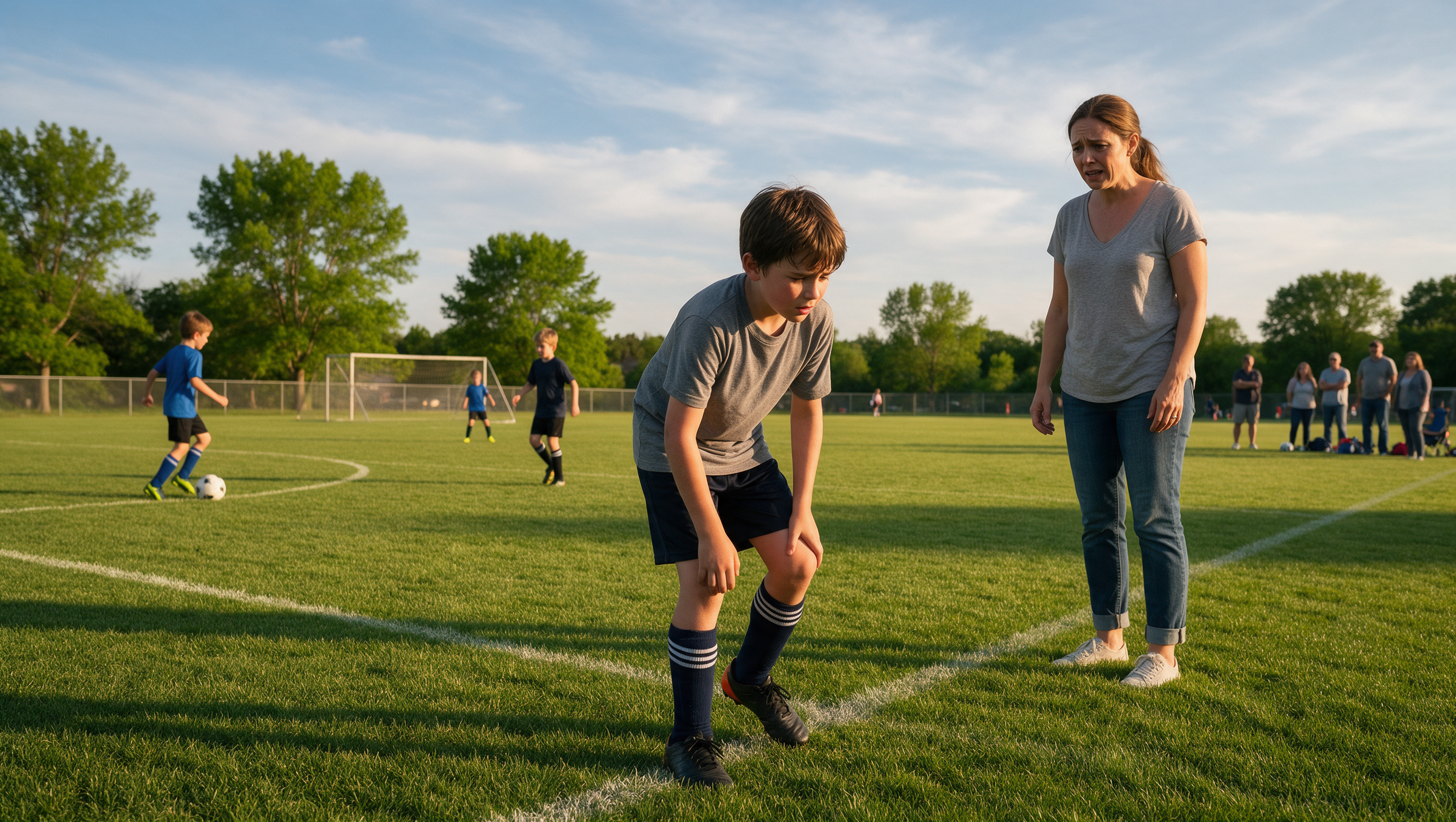
Osgood-Schlatter in both knees. The bumps below his kneecaps were swollen and sore after every practice. He limped to the car after games. He iced his knees on the ride home with a bag of frozen peas on each leg.
The orthopedist told them to stop playing for two to three years. Wait for the growth plates to close. No soccer. No running. Nothing until the bone is done growing.
The mother said her son sat in the doctor’s office and did not speak for the rest of the visit. He was eleven years old and someone had just told him the thing he loved most in the world was over.
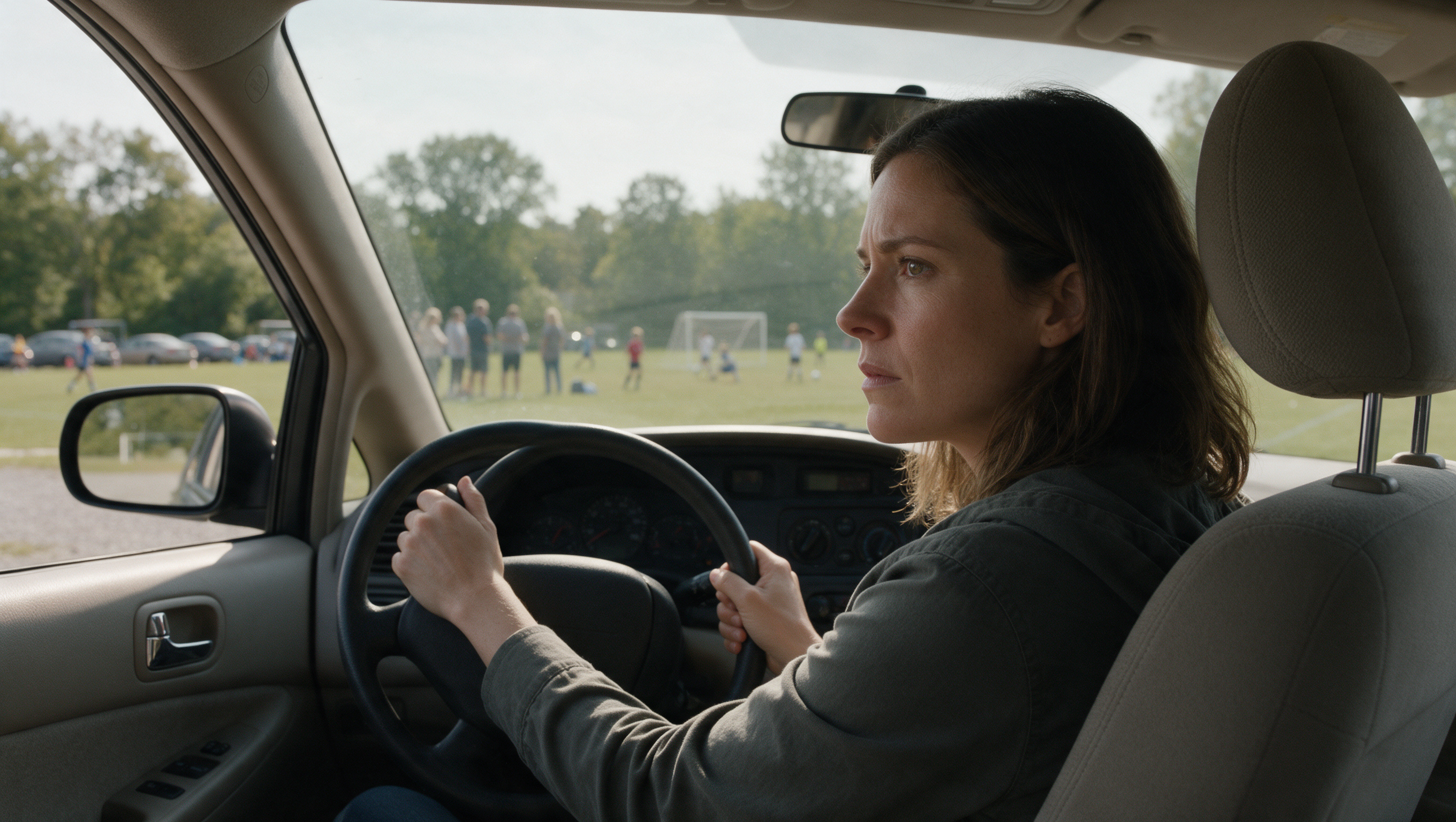
She told me she sat in the parking lot afterward and did not start the car. Her son was in the backseat, silent. She gripped the steering wheel and stared straight ahead because she did not know what to say.
If she follows the doctor’s advice, her son loses soccer for three years. He loses his teammates. He loses the thing that makes him feel like himself. At eleven, three years is forever.
If she ignores the doctor and lets him keep playing, she watches him limp off the field every practice knowing she chose this. Every wince is her decision.
“There is no right answer,” she told me. “I just have to pick which one hurts him less.”
Check Availability ›See if Bleue™ is still in stock
Why “Stop or Play” Is the Wrong Question
I told this mother something that most orthopedists do not explain.
The pain is not caused by playing soccer.
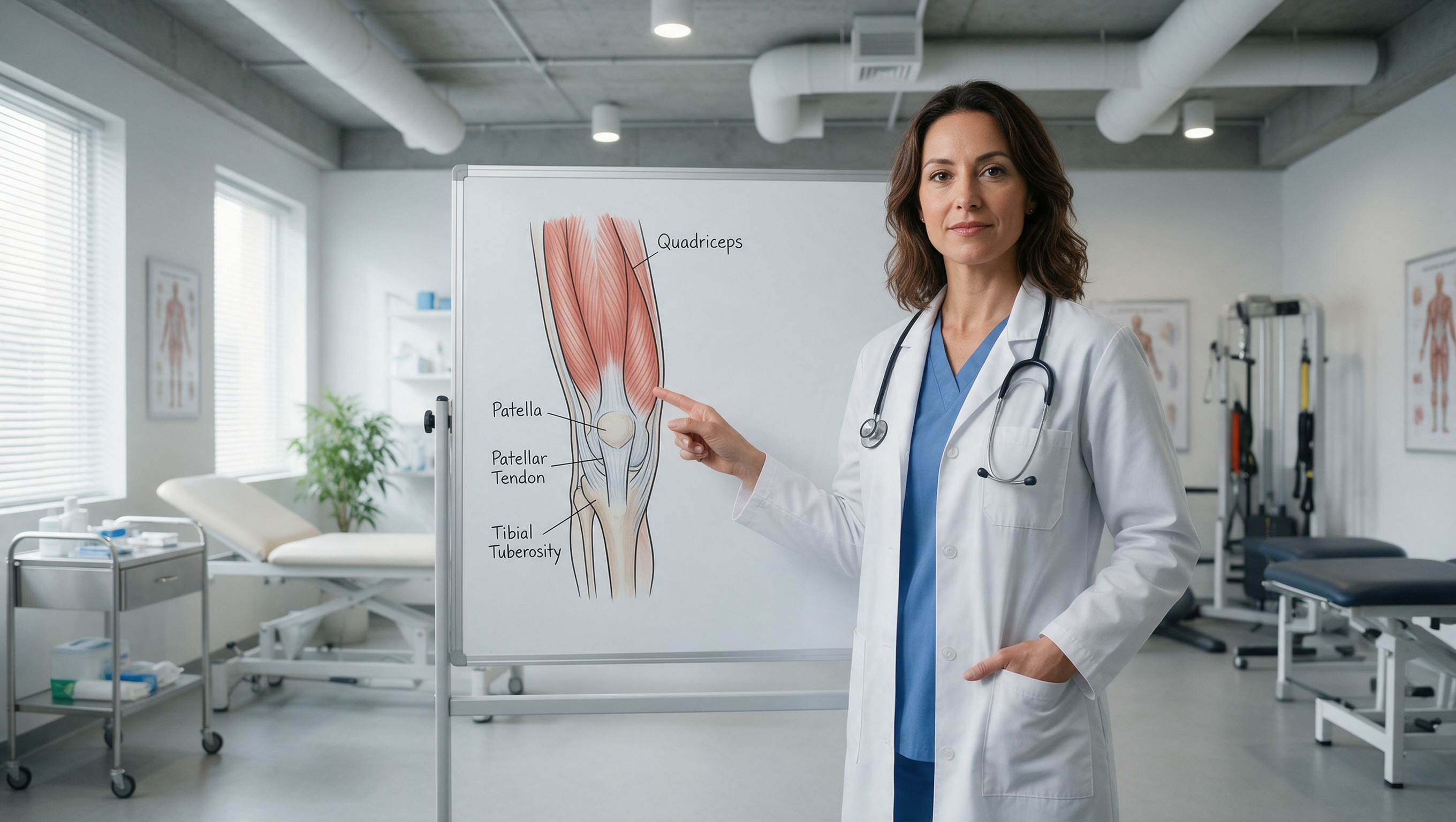
During a growth spurt, the thigh bone grows faster than the quad muscle can stretch. The quad gets chronically tight. It pulls on the tibial tuberosity, the bump below the kneecap, every time it fires.
Running, jumping, kicking a ball. All of those fire the quad. And every time it fires, the tight quad yanks on the growth plate. That is where the pain comes from.
But here is what the orthopedist missed.
The problem is not the activity. The problem is the tightness in the quad.
When you tell a child to stop playing, you remove the activity. The quad stops firing as often. The pulling slows down. The pain decreases.
It looks like it worked.
Then they go back to practice. The quad is still tight. It has been tight this whole time. It fires again. It pulls again. The pain comes right back.
The parents think the sport is hurting their child. But the sport is not the cause. The sport is just the trigger. The cause is a muscle that cannot release.
Rest does not fix tightness. It just pauses the pulling. The moment the child goes back, the tight quad fires again and the cycle restarts.
That is why “stop playing for three years” does not work. You are treating the trigger and ignoring the cause.

Why Every “Keep Playing” Fix Fails by Week Three
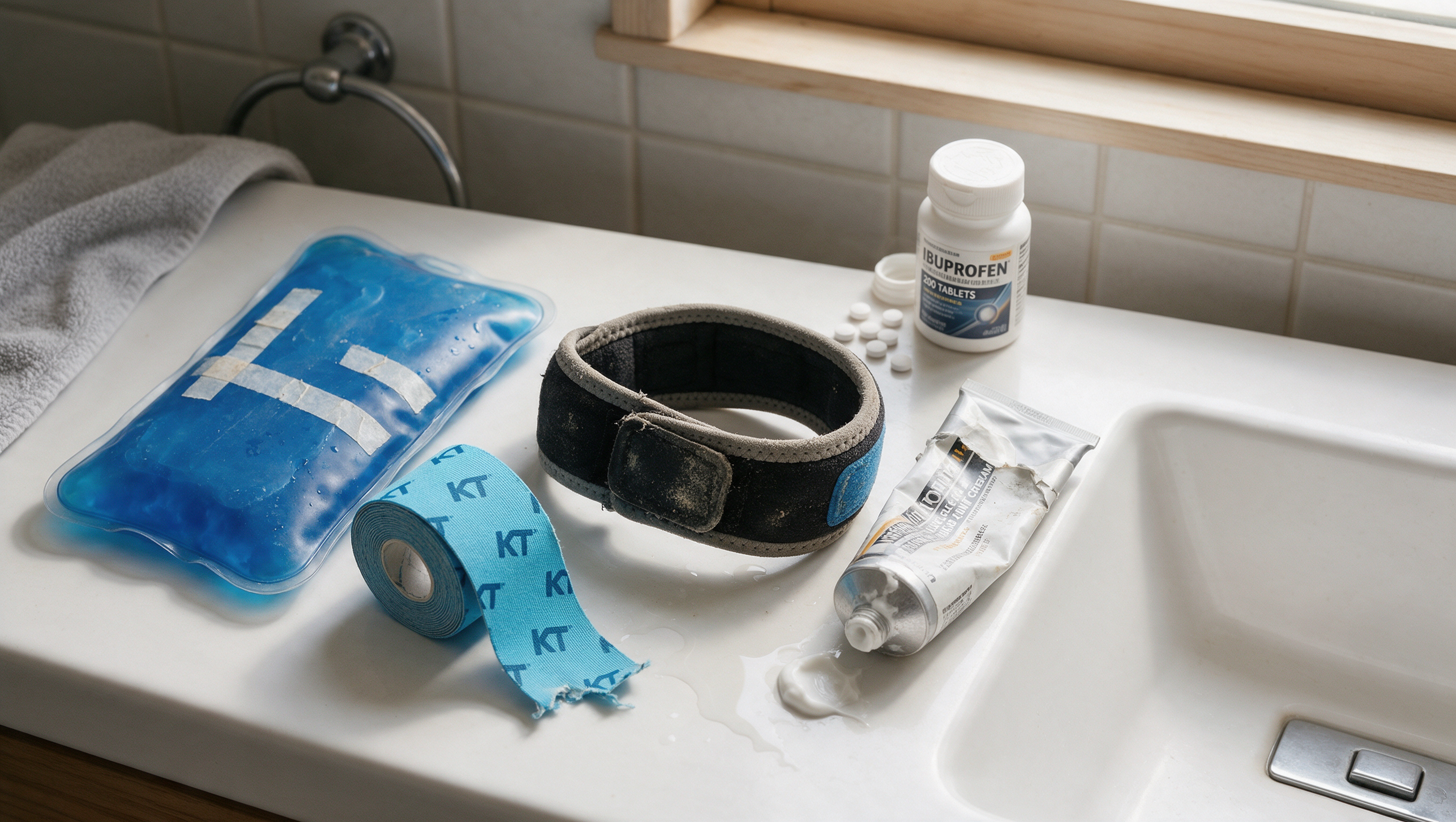
Every parent who chooses “let him keep playing” builds a kit. I have seen the same kit in a hundred gym bags and car trunks.
- Knee brace or strap: Compresses the tendon below the kneecap. Takes the edge off for the first half of practice. By the second half, the quad is so tight it pulls right through the compression. The brace is just a bandage on a muscle problem.
- Ibuprofen before practice: Blocks the pain signal for two hours. The quad is still tight. Still pulling. Still doing damage to comfort. You just cannot feel it. When it wears off, the pain is waiting.
- Ice after practice: Numbs the surface for twenty minutes. Does not reach the quad. The muscle stays tight underneath.
- PT stretches: Helpful in theory. But you cannot stretch a muscle that is chemically locked in contraction. The muscle fights back. He stretches, it tightens. He stretches harder, it guards. Some kids end up more sore after stretching than before.
- Rest days between games: The quad tension builds over a growth spurt, not over a game. One day off does not undo weeks of chronic tightness. He comes back and the limp is the same by the third drill.
Every one of these manages the situation. None of them fix the muscle.
You are not choosing between “stop” and “play through it.” There is a third option. Fix the muscle so playing does not hurt.
The Mineral That Lets the Quad Let Go
Muscles work on a two-mineral system.
Calcium fires the contraction. Magnesium ends it. They take turns hundreds of times per minute in every working muscle.
In a growing, active child, the body burns through magnesium faster than food replaces it. The quad contracts during practice and never fully releases because the mineral it needs to release is running low.
The quad stays tight between practices, between games, between rest days. It does not matter how many days off you give them. The muscle is stuck in partial contraction because the chemical that tells it to let go is depleted.
That is why rest does not work. The muscle is not tired. It is magnesium-starved.
Oral magnesium pills do not work well for this. They go through the digestive tract and lose concentration before they reach the muscle tissue. It takes hours and most of it never arrives.
Epsom salt baths use a form of magnesium that barely penetrates the skin.
What I have been recommending for the past four years is topical magnesium chloride. Applied through the skin, directly over both quads, after every practice and before bed. It delivers the release mineral straight to the muscle that is locked tight. The quad gets what it needs to let go. The pulling stops. The pain stops.
You are not masking the pain. You are not resting through it. You are giving the muscle the one thing it needs to stop causing it.
The Cream That Took “Stop or Play” Off the Table
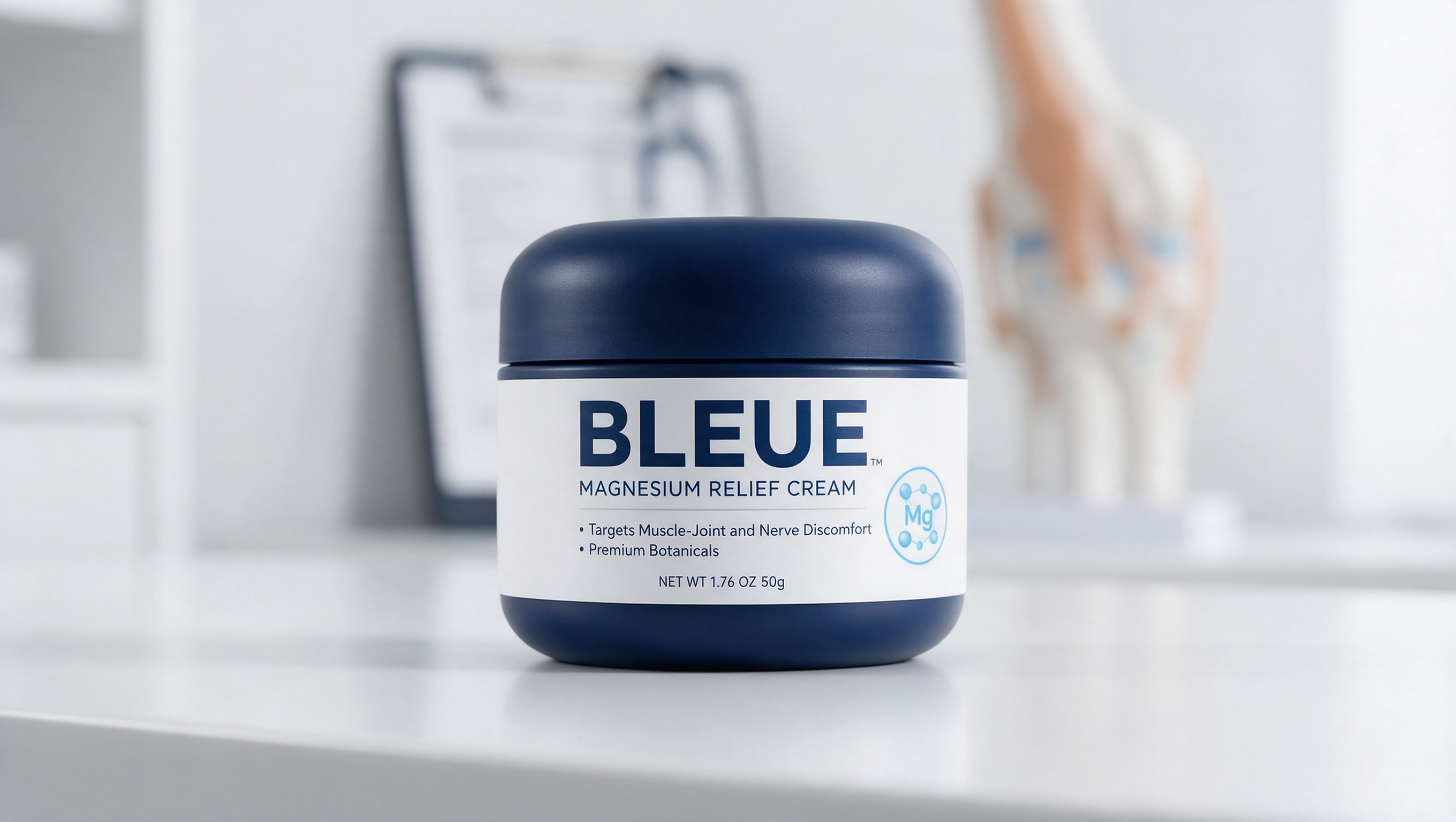
One company has formulated a cream with magnesium chloride for exactly this purpose.
It is called Bleue™.
I tell every family in my practice with an active child who has been told to stop playing to try this first. Apply it to both quads after practice and again before bed. Not on the bump. On the muscle above it. Both legs, even if only one knee hurts, because the other quad is almost always tight too.
It goes on like lotion. No sting. No burn. Nothing like the magnesium spray that burns the skin and makes a child who is already hurting scream louder.
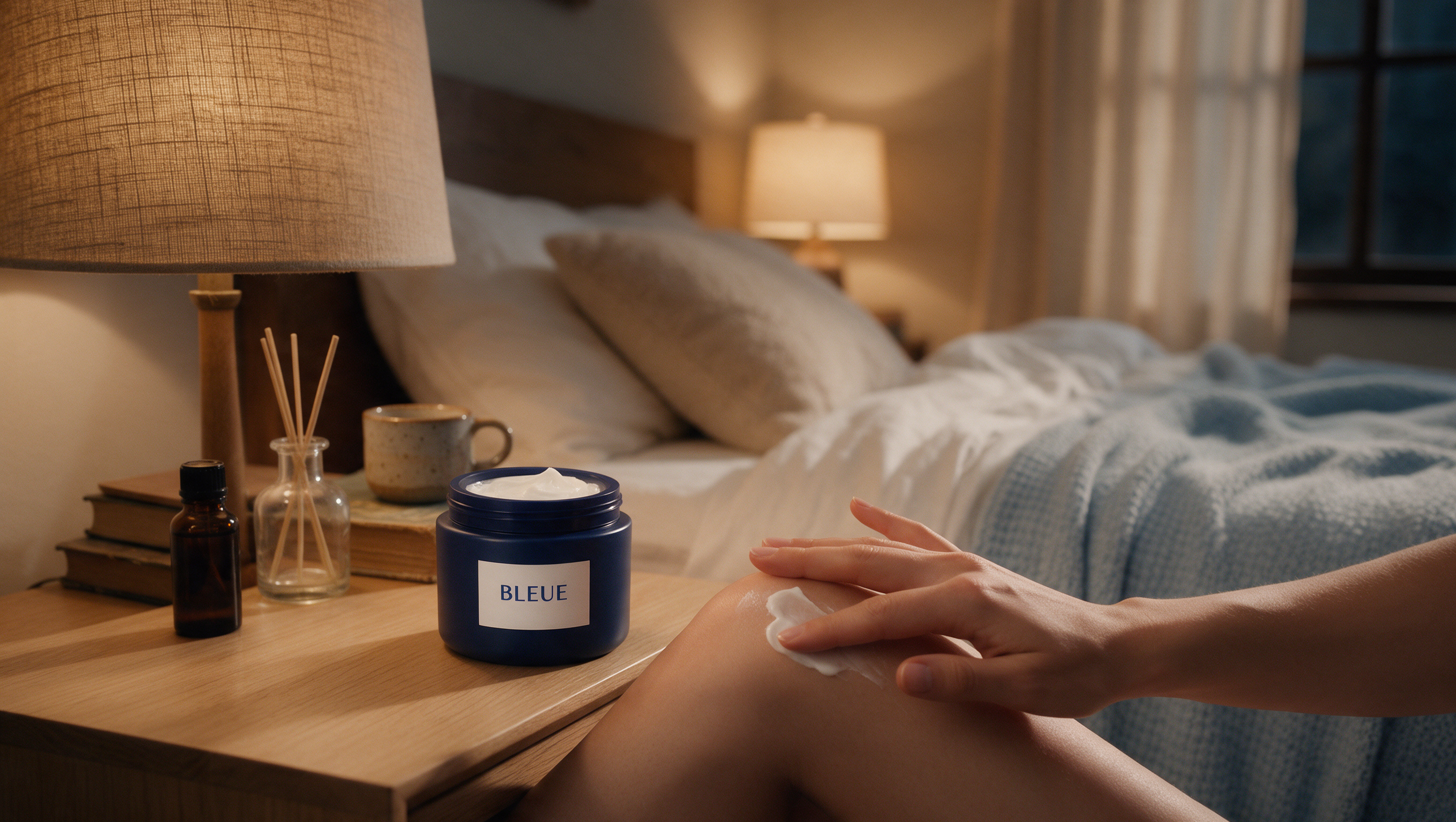
What Makes Bleue™ Different From Everything in the Gym Bag
- Magnesium chloride, not menthol. It is the actual mineral the muscle is short on. Not a numbing agent that masks the signal for 20 minutes.
- Topical delivery, not oral. Goes through the skin directly to the muscle tissue. Does not lose concentration in the digestive tract like pills.
- Cream, not spray. Stays in contact with the skin long enough to absorb. No stinging. No burning. Kids do not fight it.
- Addresses the cause, not the trigger. Braces, ice, and rest manage the activity. This fixes the muscle. He can keep playing because the quad can release.
- Works between practices, not just during. The cream absorbs and the magnesium stays in the tissue. The quad stays released between sessions instead of tightening right back up.
See if Bleue™ is still in stock
The First Practice He Walked Off the Field Without a Limp
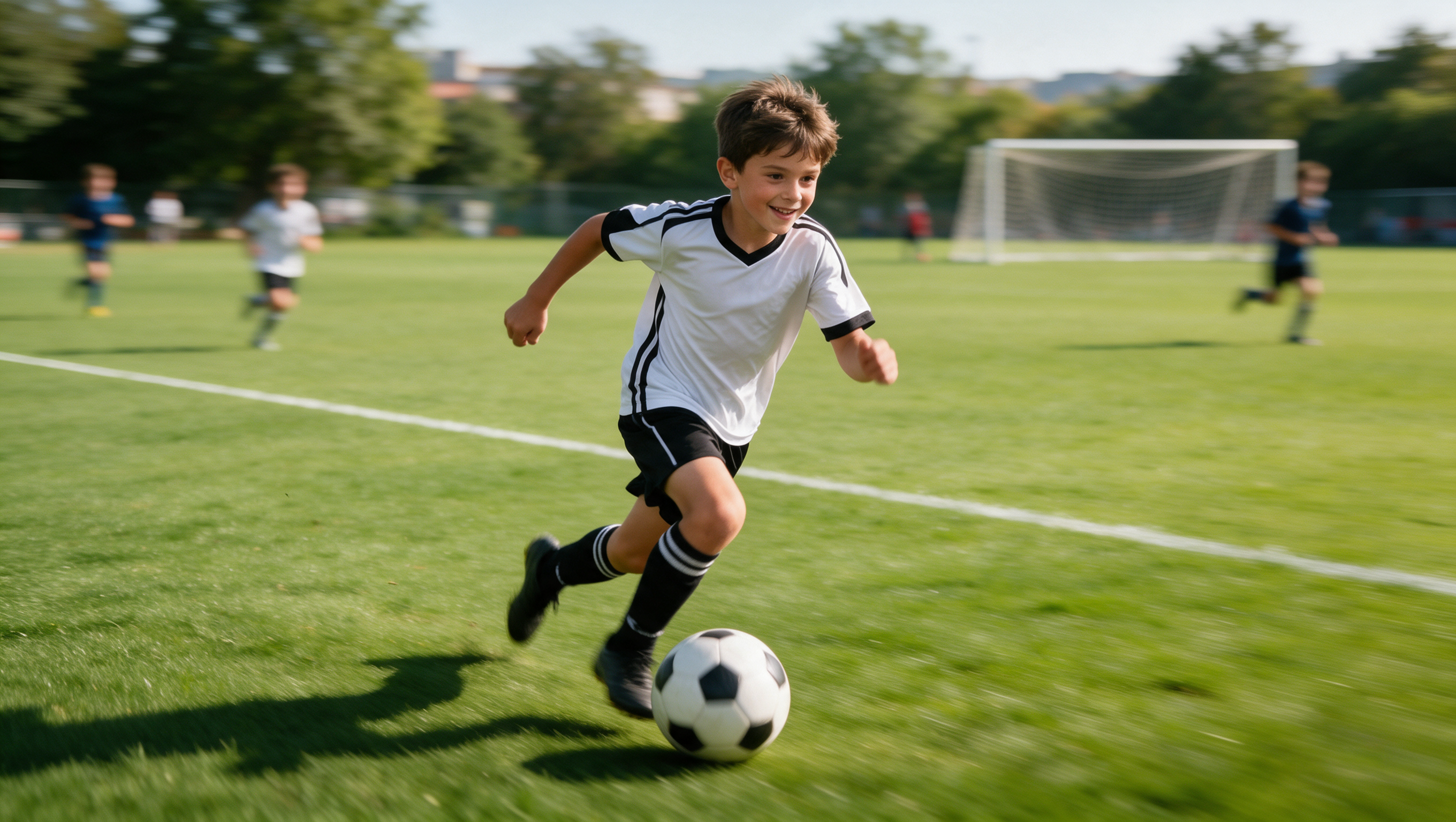
The mother I mentioned earlier started applying Bleue™ to both of her son’s quads after every practice and before bed.
The first three days, he still limped after practice. She called me. I told her the quad has been tight for months. It does not release overnight. Keep going.
Day five, she texted me two words. “He walked.”
He walked off the field after a full practice. No limp. No frozen peas in the car. No ice pack on the couch. He walked to the car, got in the backseat, and started talking about a goal he almost scored.
He was not talking about his knees. He was talking about soccer. That had not happened in months.
By the end of week two, he played a full game on Saturday. Ran the entire second half. She stood on the sideline and watched him sprint and her chest did not tighten. She did not scan his legs for a limp after every play.
She told me the worst part of the last six months was not the pain. It was watching him walk off the field early while his teammates kept playing. Standing in the parking lot knowing she was about to have the conversation again. “Maybe we should take a break.” His face every time she said it.
By week three, the conversation was gone. There was nothing to decide. He was playing. He was not limping. She was not choosing.
She called me three weeks in. She did not talk about pain scores or swelling.
She said, “I do not have to choose anymore.”
This Is Not About Pain Management. It Is About Keeping Them in the Game.
The real cost of activity-related knee pain is not the knee.
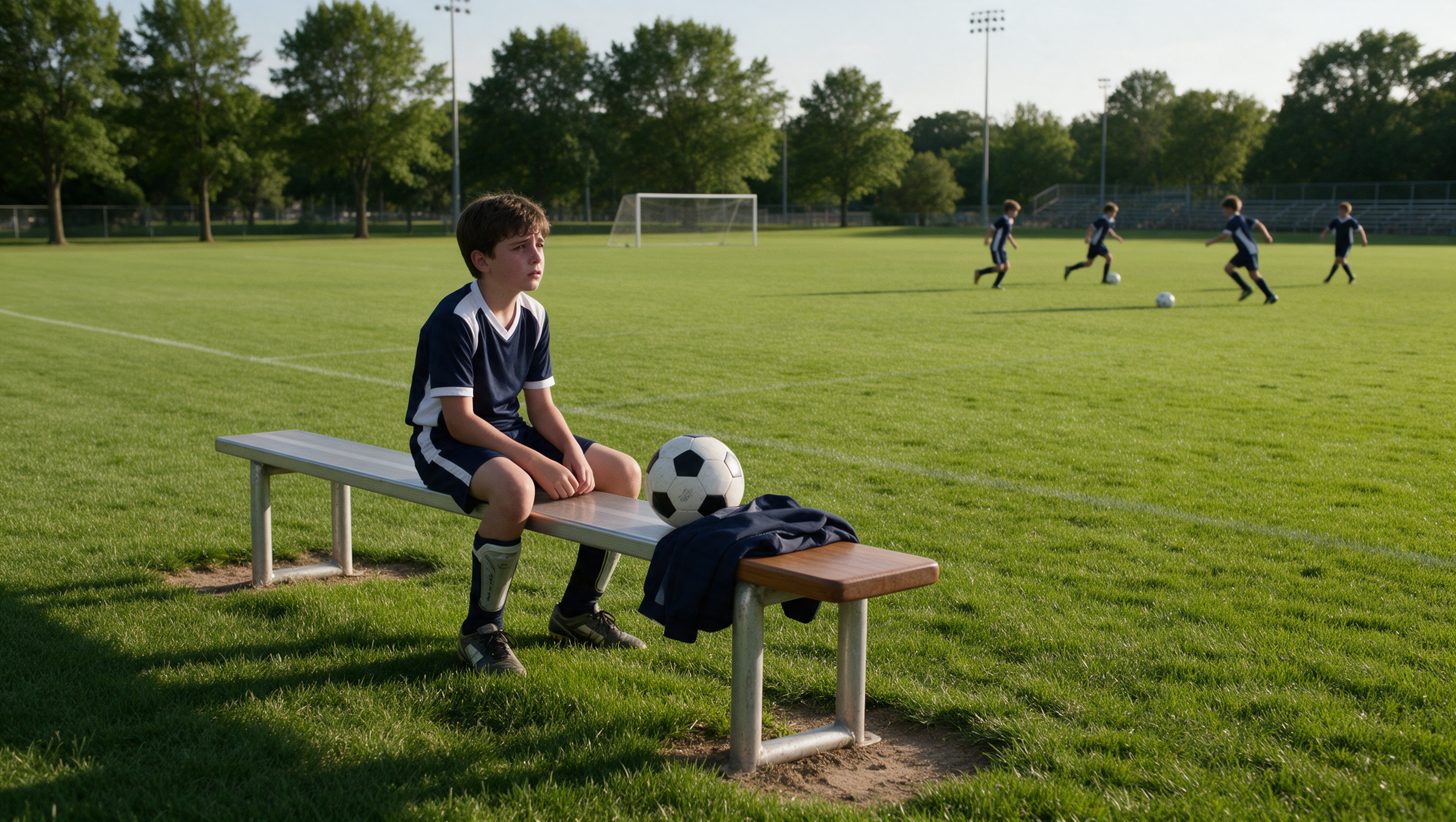
It is the child who sits on the bench watching their teammates practice without them. It is the parent in the parking lot trying to figure out if they are making the right call. It is the ride home where nobody talks because there is nothing left to say.
No parent should have to choose between protecting their child’s body and protecting their child’s identity.
That choice only exists when you believe the activity is the problem. When you realize the tight quad is the problem, the choice disappears.
Fix the muscle. The kid plays. The limp stops. The conversation is over.
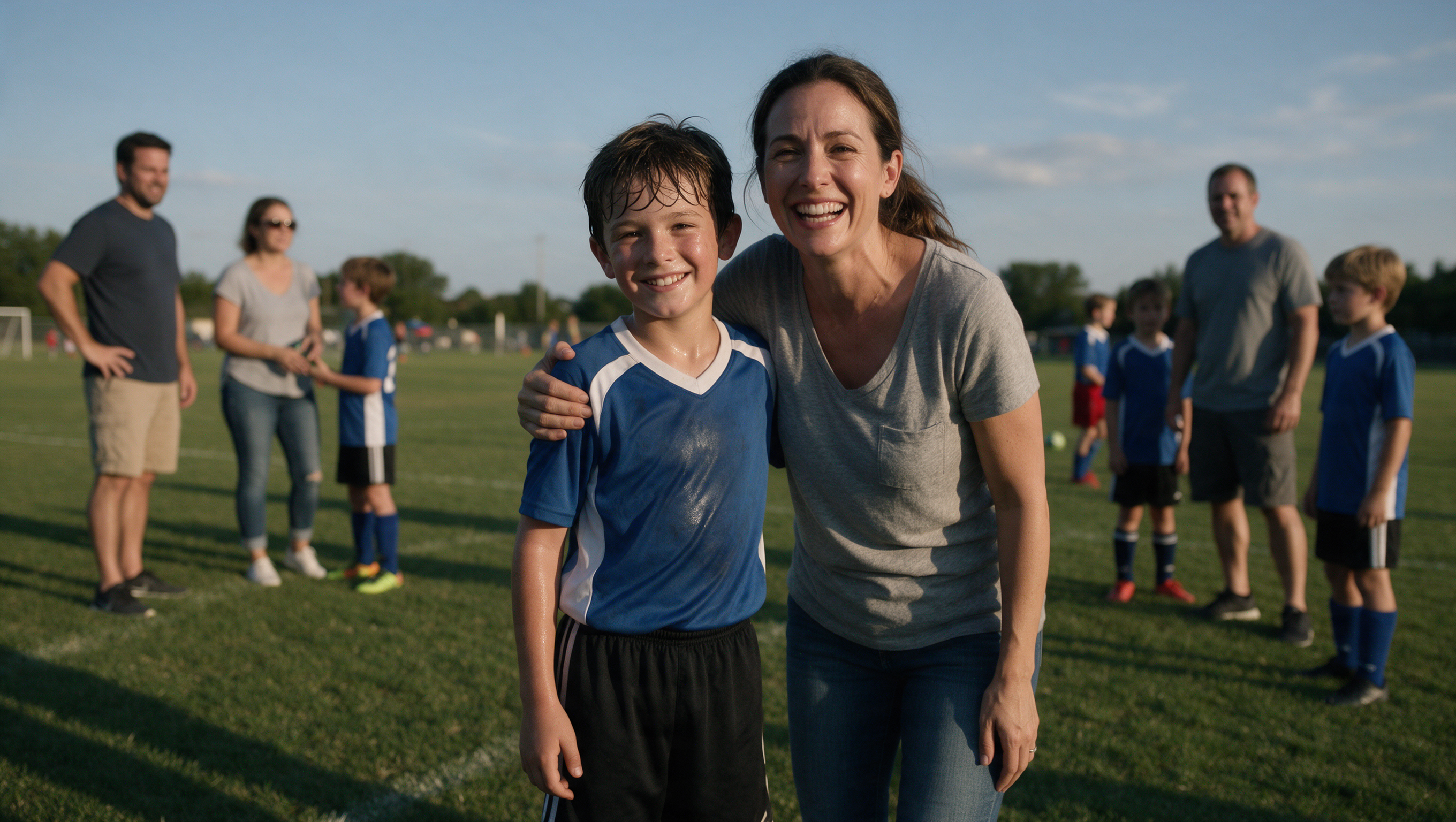
What I Would Tell Any Parent Sitting in That Parking Lot Right Now
If you are stuck between “stop playing” and “play through the pain,” you do not have to pick either one.
Right now, the company behind Bleue™ is running a deal on their website. I do not know how long it lasts. I have been telling every family I work with about it and word is spreading fast among sports parents.
Click the button below and see if it is still available.
You will know within a week. Not because the bump disappears. Because the limp after practice does.
Check Availability ›Limited quantities. Check if Bleue™ is still in stock.
If for any reason it does not work for your child, Bleue™ offers a 90-day money-back guarantee. No questions asked. No hassle. Send it back, get a full refund.
They are confident enough in what this does to let you try it with zero risk. That tells you something.
The only risk is doing nothing. Another week of watching him limp off the field. Another parking lot conversation you both dread. Another night wondering if pulling him out is the right call.
You do not have to make that choice.
P.S. Here is what families in my practice have reported after using Bleue™ on their child’s quads:
“Our orthopedist said to stop travel soccer for two years. My son cried in the car the whole way home. I could not do it. I started Bleue™ on both his quads after every practice. By day five, the limp was gone. By week two, he played a full game without sitting out. By week three, he was sprinting again. His coach asked what changed. I told him nothing changed except we stopped treating the wrong thing.”
— Angela W., mother of an 11-year-old travel soccer player
“My daughter plays club volleyball. The doctor said to stop jumping for a year. She is 13. Volleyball is her whole social life. I tried Bleue™ because I could not tell her to quit. Within a week, the pain after practice dropped from an eight to a three. By week three, she said it felt like before the growth spurt. She is still playing. She never had to stop.”
— Rachel K., mother of a 13-year-old volleyball player
“We went through the whole cycle. Doctor said stop. We stopped for four months. He was miserable. Went back to basketball. Pain came right back in two weeks. Everything the doctor promised would fix itself came right back. Then a friend told me about Bleue™. Three weeks in, he is playing full games with no limp. Rest did not fix anything. This did.”
— Marcus J., father of a 12-year-old basketball player
Click above to see if Bleue™ is still available at their current deal
THIS IS AN ADVERTISEMENT AND NOT AN ACTUAL NEWS ARTICLE, BLOG, OR CONSUMER PROTECTION UPDATE
Dr. Sarah Chen is a composite character created for illustrative purposes. Individual results vary. Bleue™ Joint Relief Cream is not a medication and is not intended to diagnose, treat, cure, or prevent any disease. Testimonials reflect individual experiences and are not guarantees of results. Consult your child’s healthcare provider before starting any new treatment protocol. This content has not been evaluated by the FDA.