Why Her Knee Pain Came Back After 3 Months of Rest — And the One Mineral a Sports Therapist Says Fixes It for Good in One Week

My name is Dr. Sarah Chen.
I am a Doctor of Physical Therapy and a Certified Strength and Conditioning Specialist. I have spent 15 years treating young athletes with activity-related knee pain.
And the hardest conversation I have is not with the family that just got the diagnosis.
It is with the family that did everything right. They rested. They sat out the season. They watched their child miss months of the sport they loved. They did the hard thing because the doctor said it would work.
Then the child went back. And within a week, the pain was right back where it started.
That is the conversation that breaks parents.
Not the first diagnosis. The second one. The realization that all those months of sacrifice did not fix anything. That the pain was waiting for them.
I am going to explain exactly why that happens. And why it will keep happening until you address the one thing rest cannot fix.
The Mother Who Did Everything the Doctor Said and Still Ended Up Back in My Office
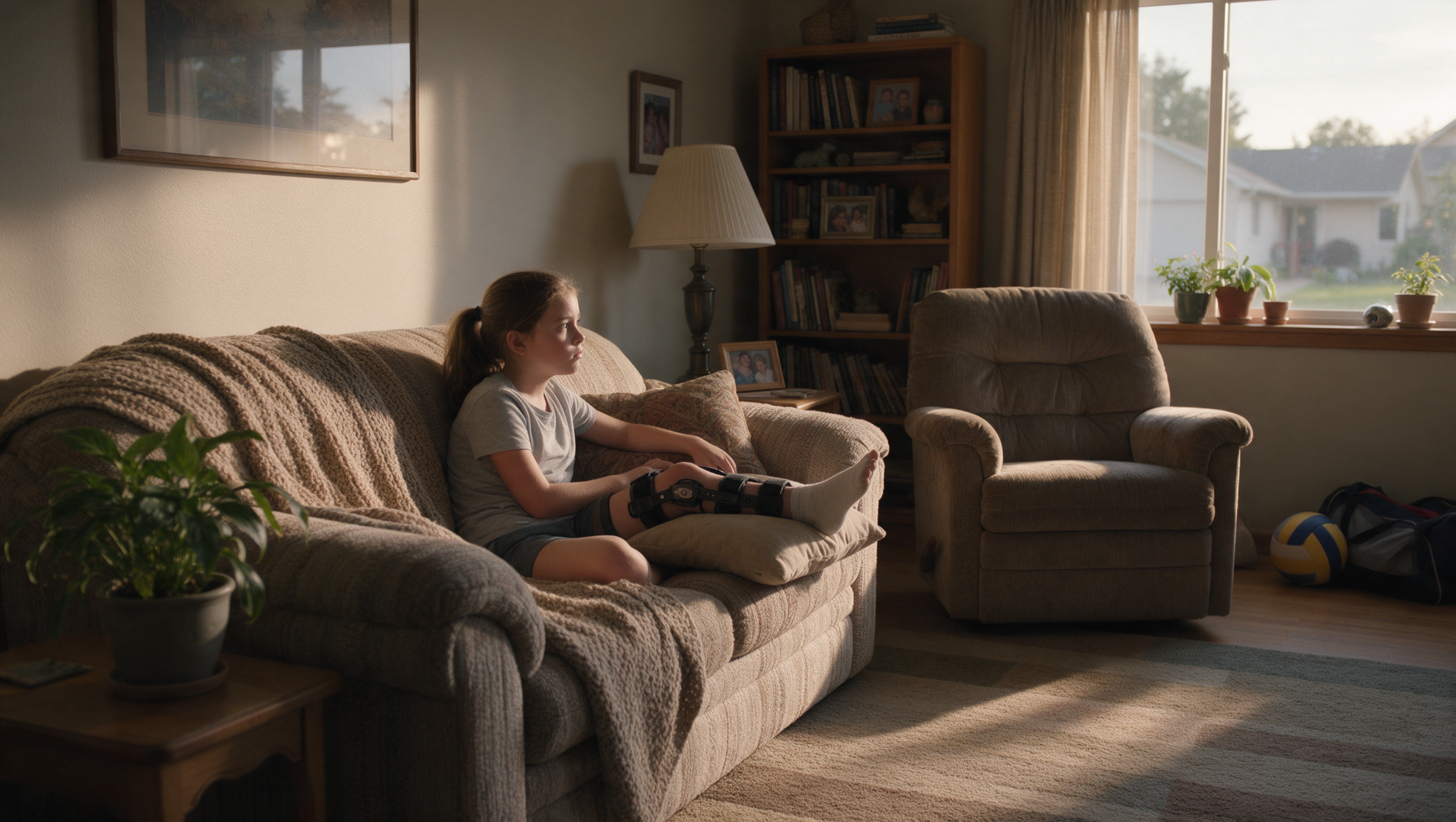
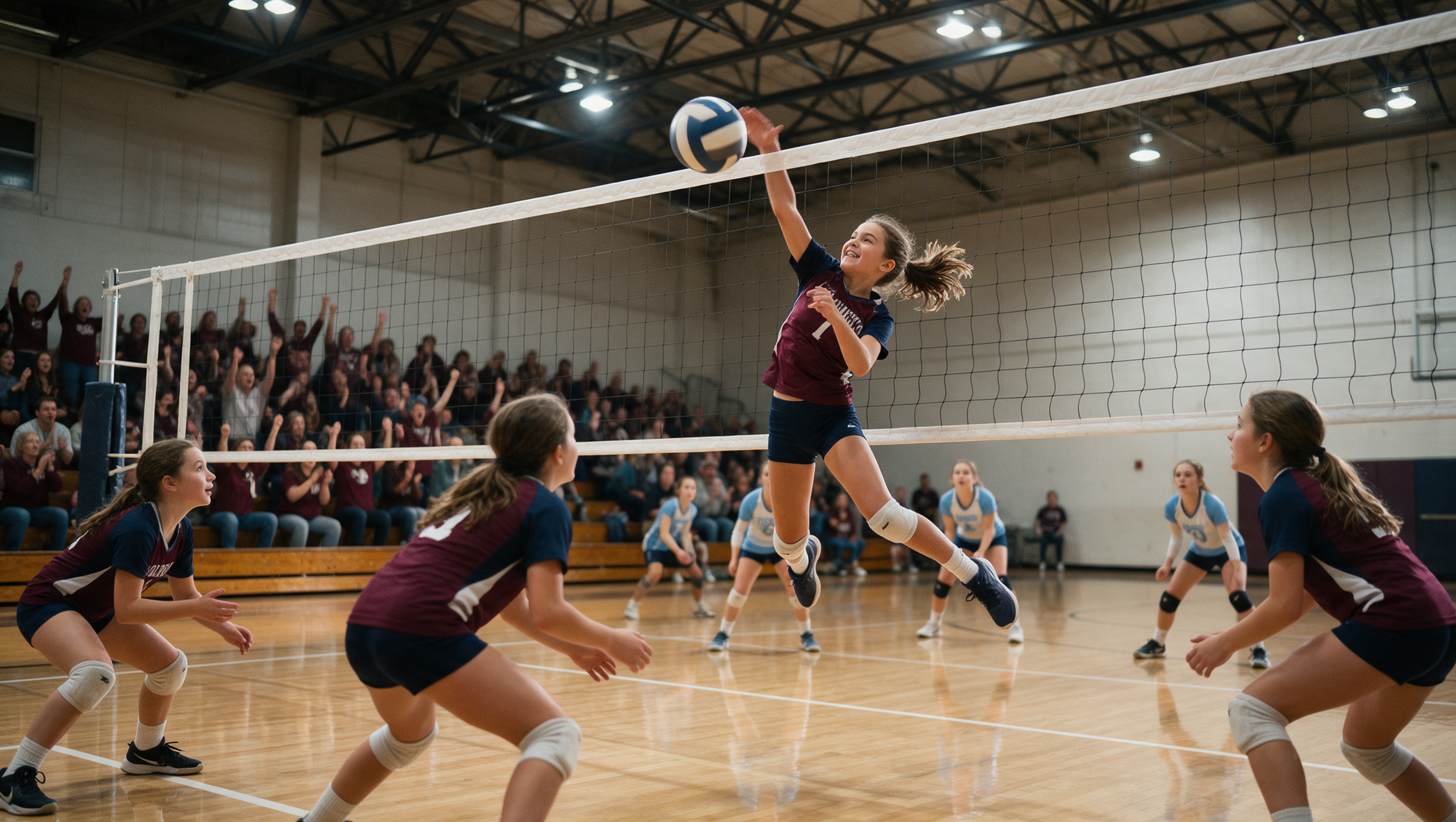
Last winter, a mother brought her 13-year-old daughter into my clinic. She played club volleyball. Three practices a week plus weekend tournaments. She had been one of the strongest hitters on her team.
Then Osgood-Schlatter hit both knees during a growth spurt. The bumps below her kneecaps swelled. She started limping after practice. Landing on her jumps hurt so much she flinched every time.
The orthopedist told them to rest for three months. No volleyball. No jumping. No running. Wait it out.
So they did. Three months on the couch. Three months watching her teammates post practice videos without her. Three months of a 13-year-old girl who went from being the loudest voice on the court to sitting in her room scrolling through her team group chat.
By month two, the pain was gone. She could walk up stairs. She could bend her knees without wincing. The bumps were still there but they did not hurt.
The mother thought they had made it through.
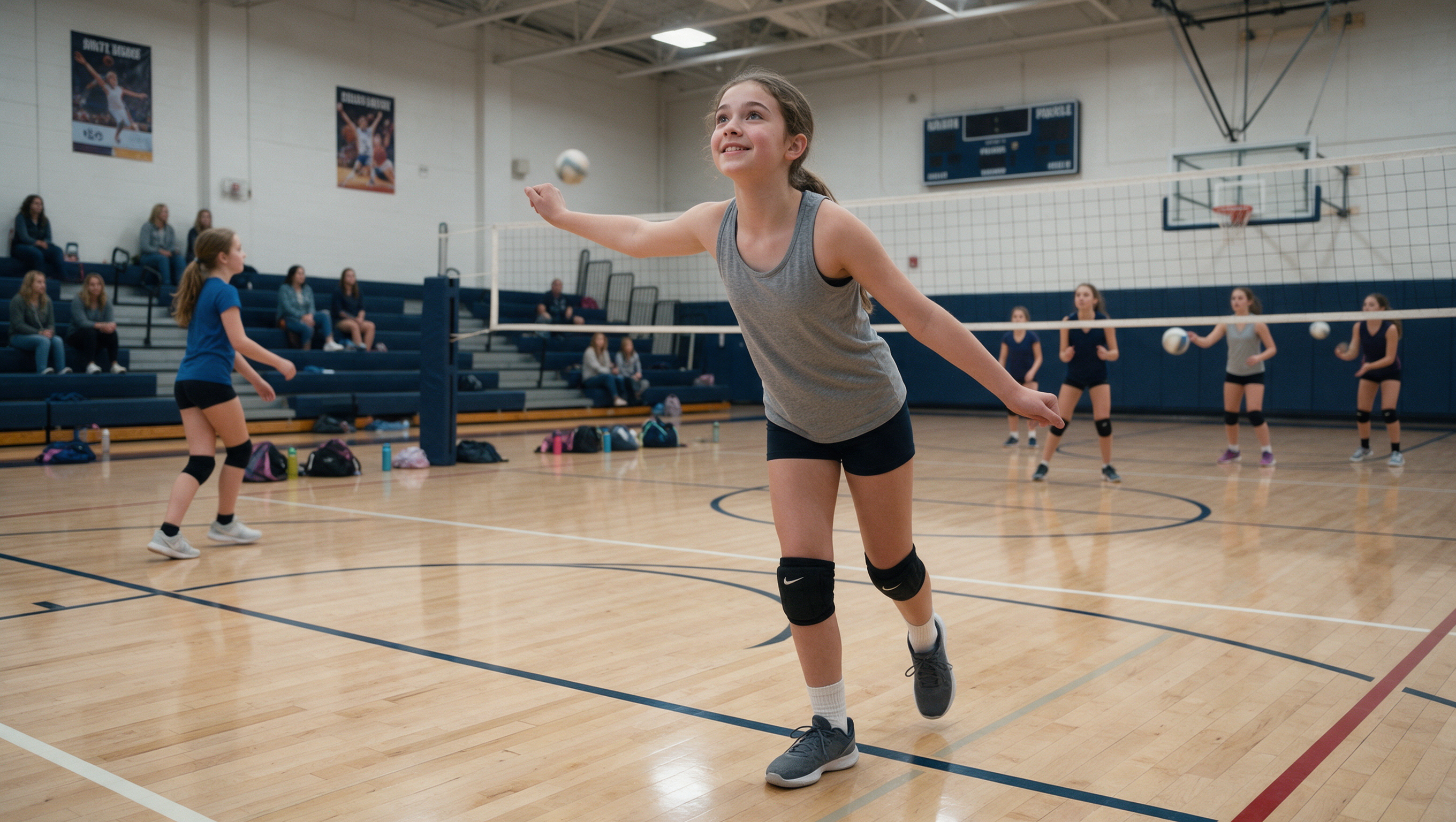
Month three. She went back to practice. The first day felt amazing. She was back with her team. She was jumping again. She was smiling in a way her mother had not seen in months.
Day two, the soreness crept in. She shook it off. Just getting back into shape.
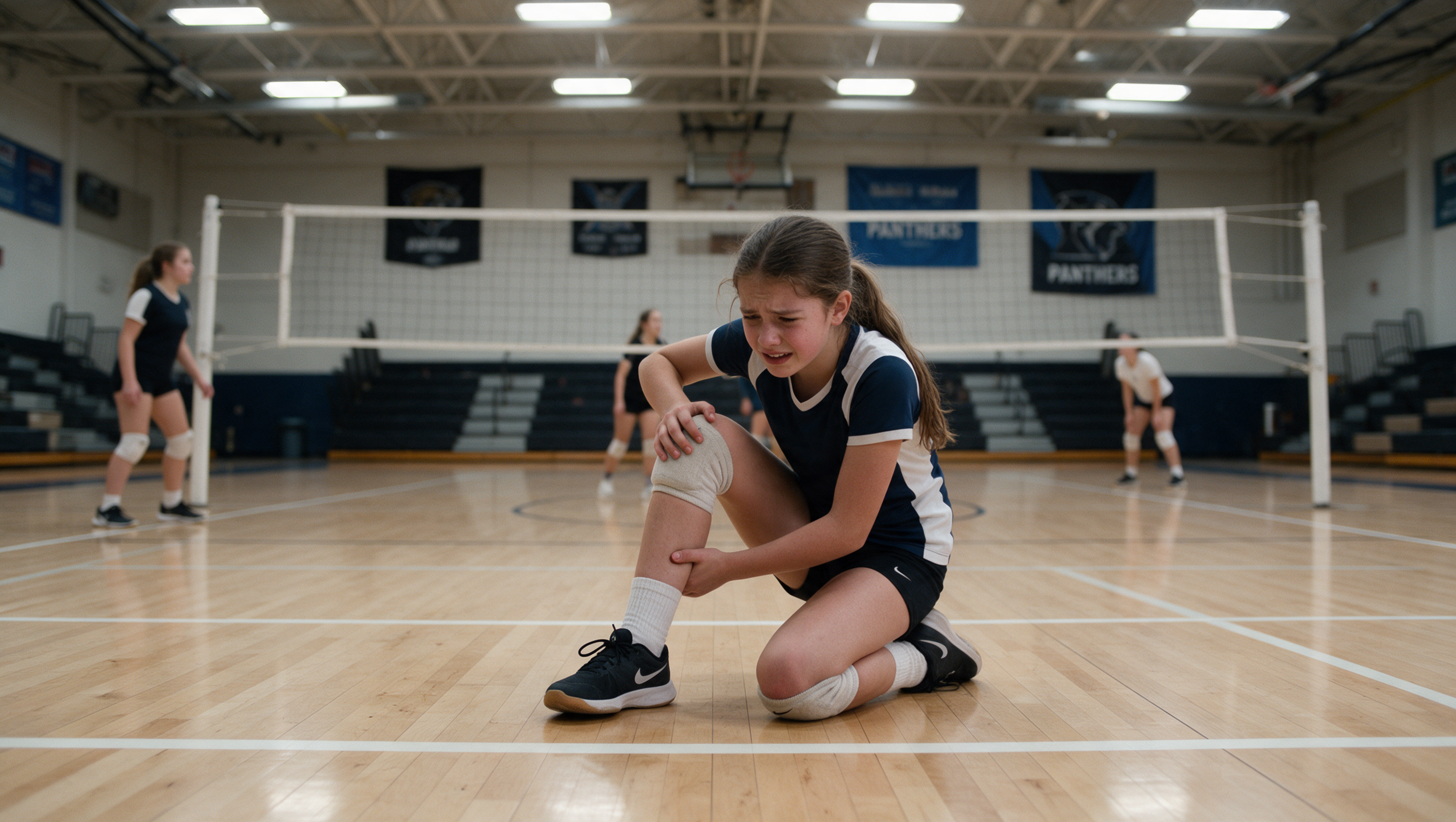
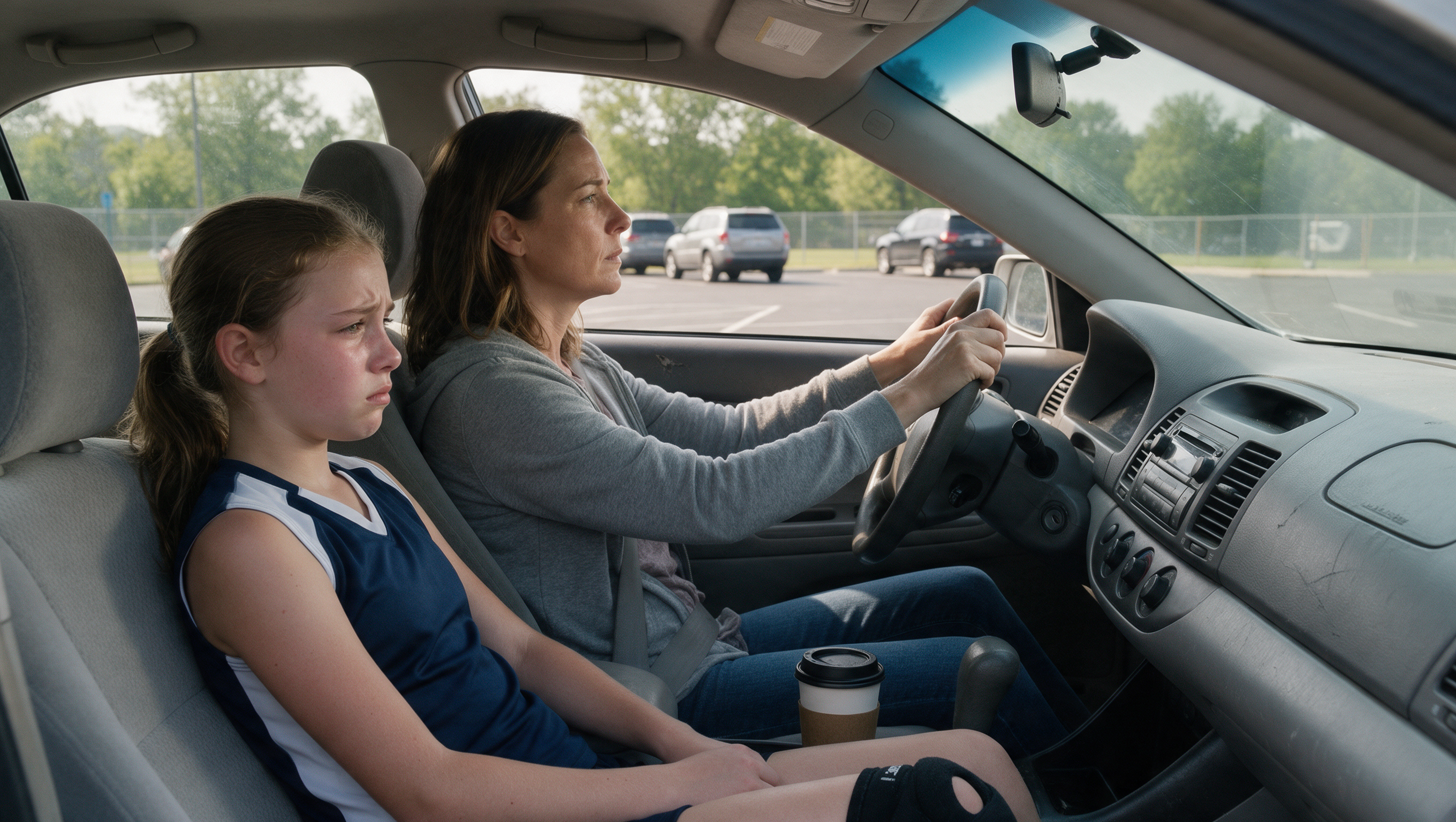
Day four, the limp was back. By the end of the first week, she was sitting on the bench at practice holding her knees. The same knees. The same pain. The same swollen bumps.
Three months of rest. Gone in five days.
The mother sat in my office and said something I have heard too many times.
“We did everything right. We rested. We waited. We sacrificed the whole season. And it is exactly the same. How is that possible?”
Check Availability ›See if Bleue™ is still in stock
Why Rest Pauses the Pain but Never Fixes It
I told this mother the same thing I tell every parent who walks in after a failed rest period.
Rest does not fix what is causing the pain.
Here is what is actually happening inside the body.
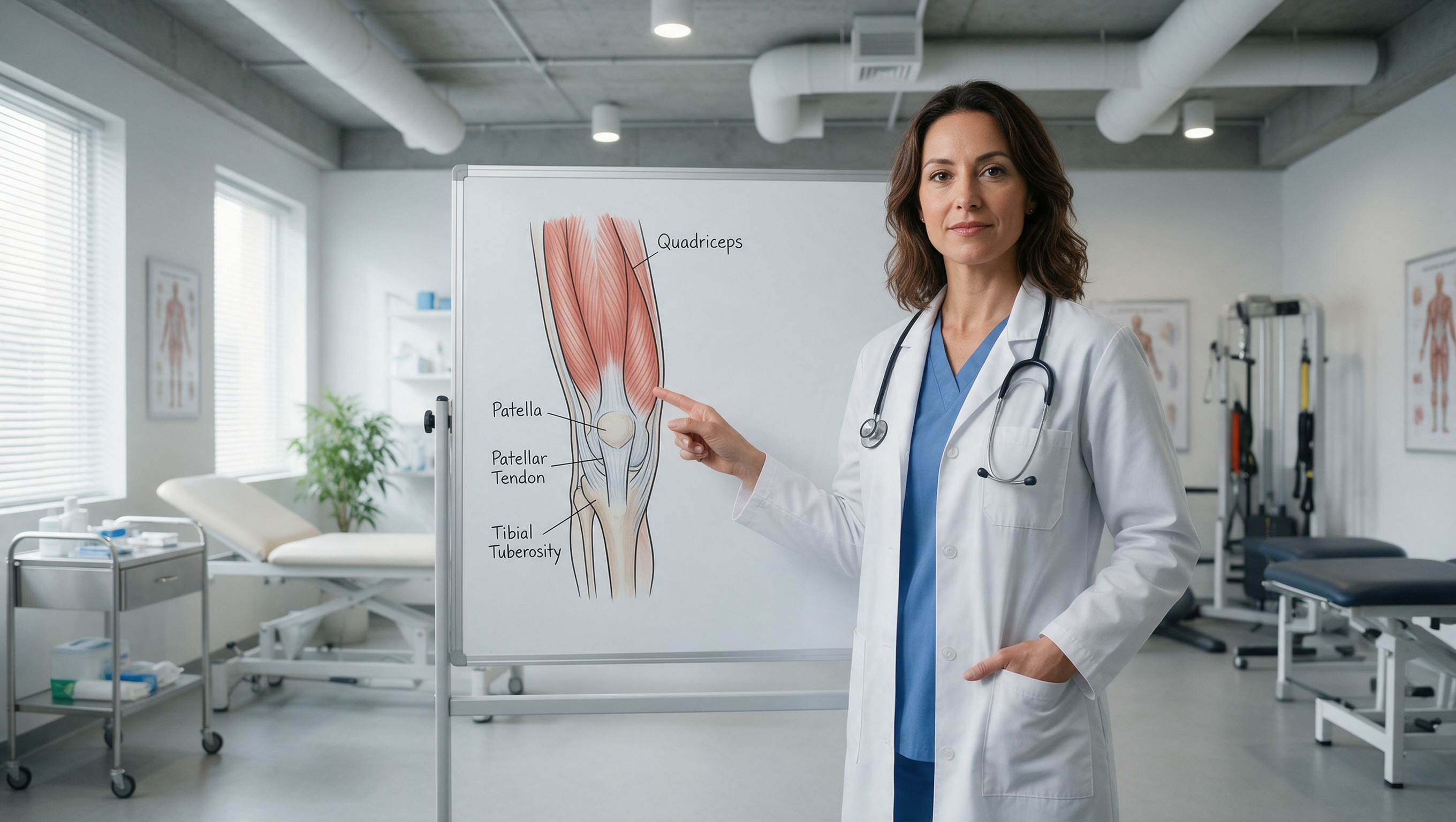
During a growth spurt, the thigh bone grows faster than the quad muscle can stretch. The quad gets chronically tight. Its tendon pulls on the tibial tuberosity, the bump below the kneecap, every time the muscle fires.
When the child plays sports, the quad fires hundreds of times. Running, jumping, landing. Every contraction yanks on the growth plate. That is where the pain comes from.
When the child rests, the quad stops firing as often. The pulling slows down. The inflammation settles. The pain fades.
It looks like it worked. It feels like it worked.
But the quad is still tight. It has been tight this entire time. Rest removed the trigger but it did not release the muscle. The tightness sat there for three months, quiet and unchanged, waiting.
The moment the child goes back to their sport, the tight quad fires again. It pulls on the same growth plate. The inflammation comes right back. The pain comes right back. Usually within the first week.
Rest is a pause button. Not a fix.
That is why the pain “always comes back.” Not because the child went back too early. Not because they did too much on the first day. Because the muscle that was causing the problem in the first place never changed. It was tight before the rest. It was tight during the rest. And it was tight on the first day back.
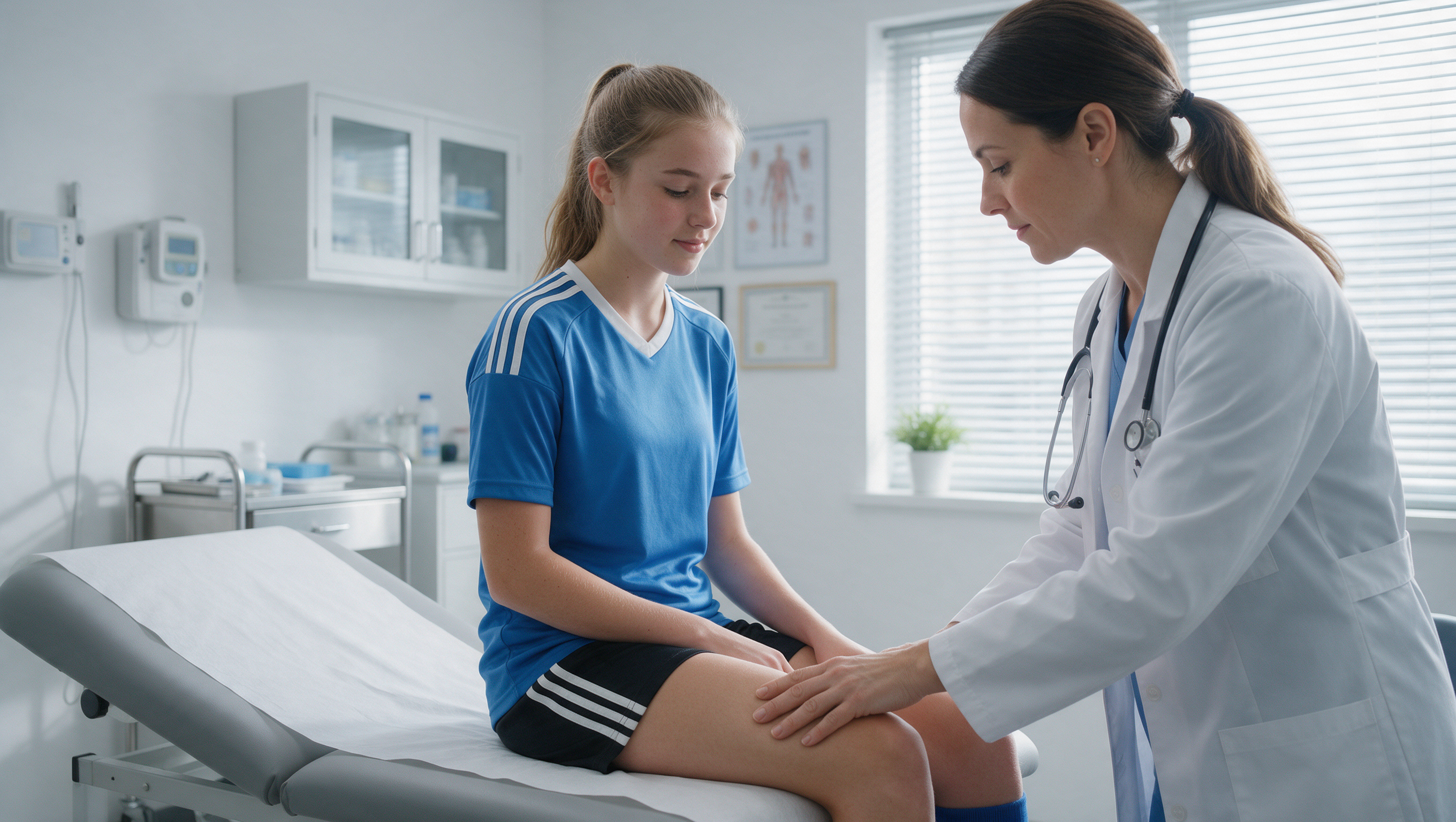
Why Longer Rest, More Rest, and “Easing Back In” All Fail the Same Way
After the first rest cycle fails, every parent tries the same set of adjustments. I have watched this loop hundreds of times.
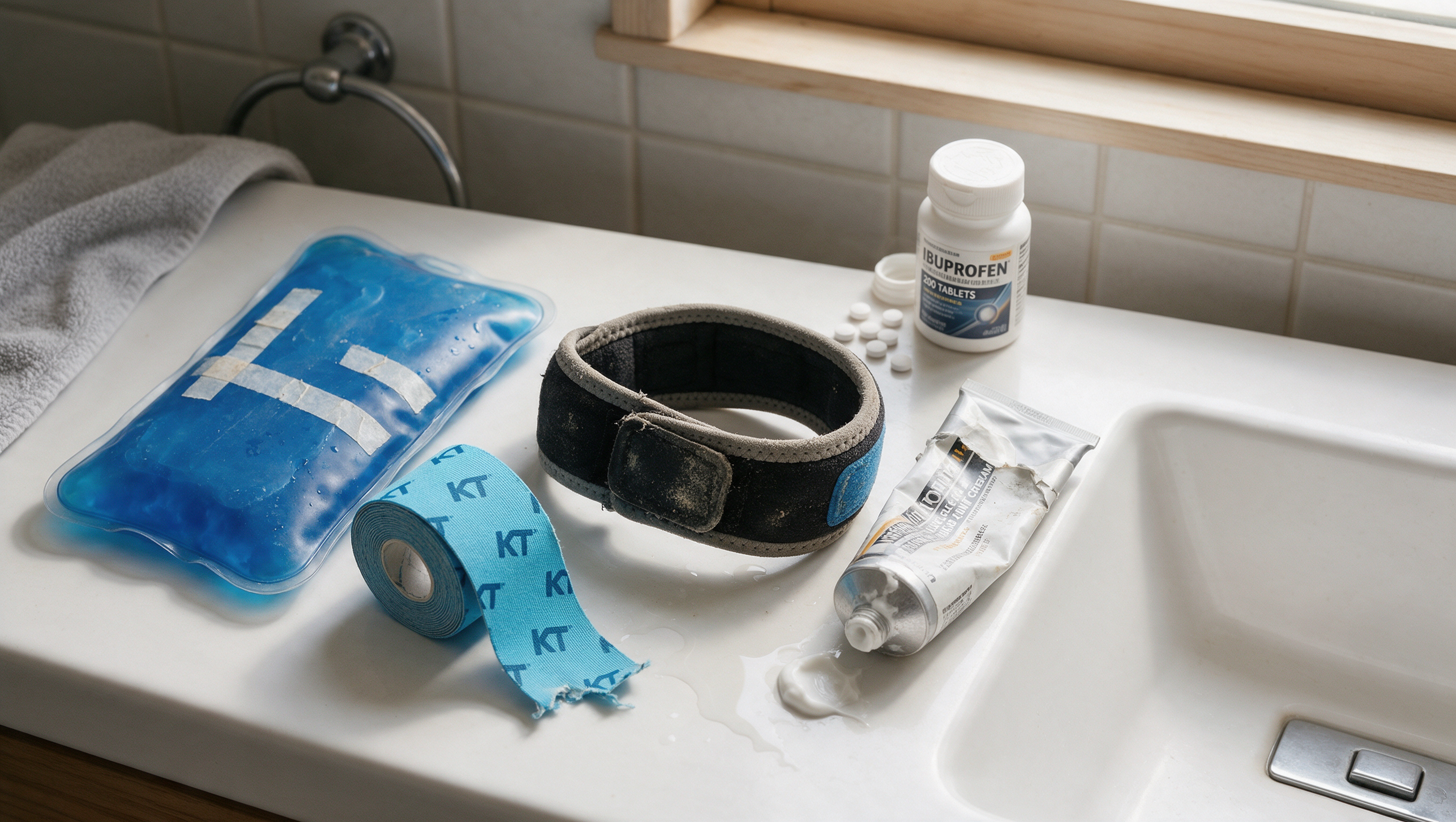
- Rest longer: If three months did not work, they try four. Or five. Or the full “wait until growth plates close” timeline. The quad stays tight the entire time. More rest does not release a tight muscle. It just delays the return of pain.
- Ease back in slower: One practice a week instead of three. Half the drills. Sit out the jumping. The quad still fires. Even reduced activity loads a tight quad. The pulling is lighter but it is still there. The pain returns slower but it still returns.
- Add PT stretches: Stretching a muscle that is chemically locked in contraction does not release it. The muscle fights back. Some kids get more sore from the stretching than from the sport.
- Brace it and play: The brace compresses the tendon, not the muscle. It takes the edge off for the first half of practice. By the second half the quad is pulling right through the compression.
- Ibuprofen on return days: Blocks the pain signal. The quad is still tight, still pulling, still inflaming the growth plate. You just cannot feel it. When it wears off, the pain catches up.
Every one of these adjusts the return. None of them address the muscle.
You can change the timeline, the intensity, and the schedule. But if the quad is still tight on the day she goes back, the pain is coming back with her.
The One Thing Rest Cannot Do (And the Mineral That Can)
Muscles work on a two-mineral system.
Calcium fires the contraction. Magnesium ends it. They take turns hundreds of times per minute in every working muscle.
In a growing, active child, the body burns through magnesium faster than food replaces it. The quad contracts during practice and never fully releases because the mineral it needs to release is depleted.
During a rest period, the quad fires less often. But the underlying depletion does not resolve. The child is still growing. The body is still burning through magnesium for bone growth, muscle development, and a hundred other processes. The quad never gets enough to fully release.
That is why the tightness survives the rest. The muscle is not tired. It is mineral-starved. Rest does not restock magnesium. Only magnesium restocks magnesium.
Oral magnesium pills lose concentration in the digestive tract. They take hours to absorb and most of the mineral never reaches the quad.
Epsom salt baths use a form of magnesium that barely penetrates the skin.
What I have been recommending for the past four years is topical magnesium chloride. Applied through the skin, directly over both quads. It delivers the release mineral straight to the muscle that has been locked tight for months. The quad finally gets what it needs to let go. The tightness resolves. And when the child goes back to their sport, the quad fires and releases normally. No yanking. No inflammation. No pain coming back.
The Cream That Made “Going Back” Actually Work
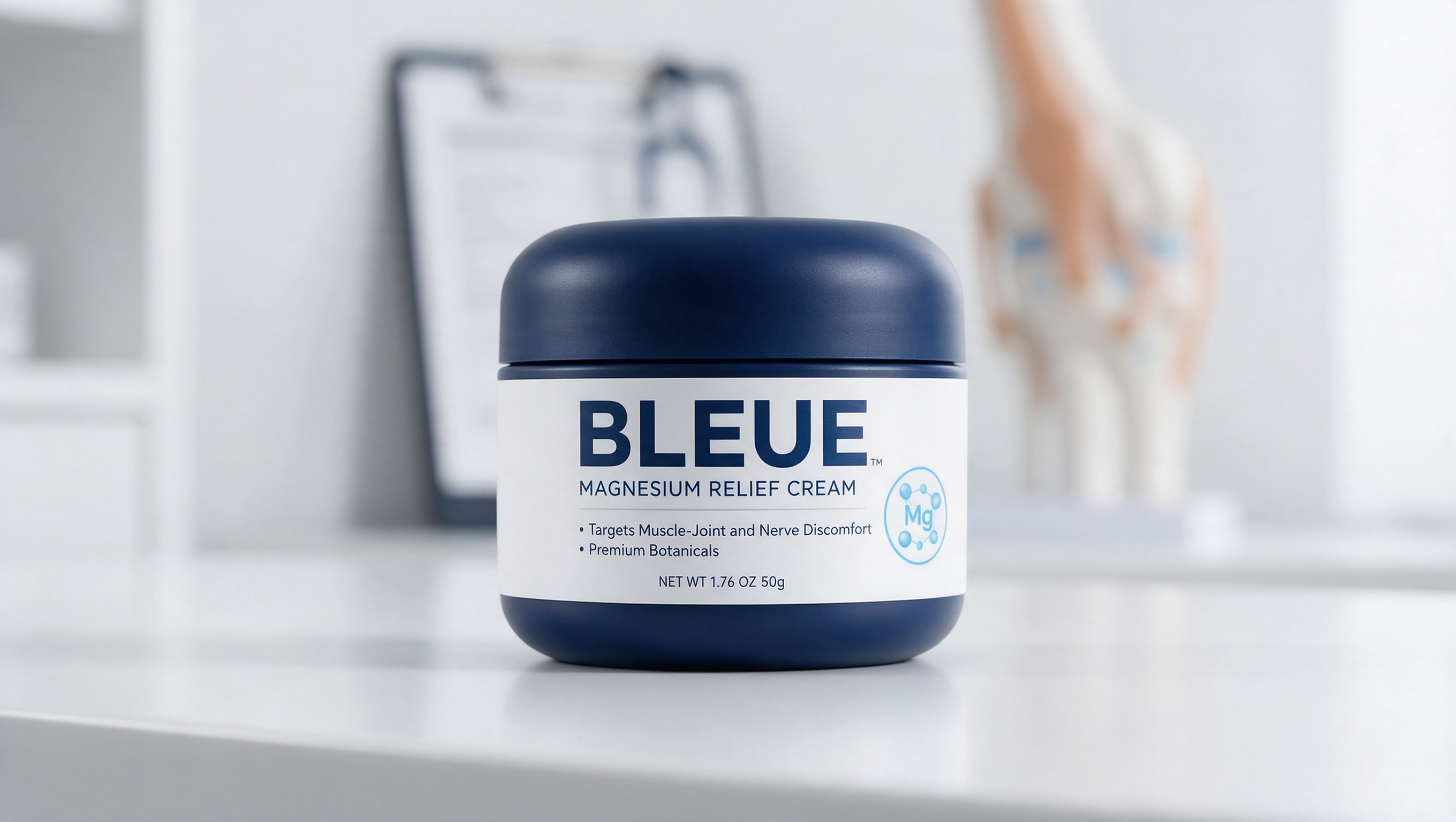
One company has formulated a cream with magnesium chloride for exactly this purpose.
It is called Bleue™.
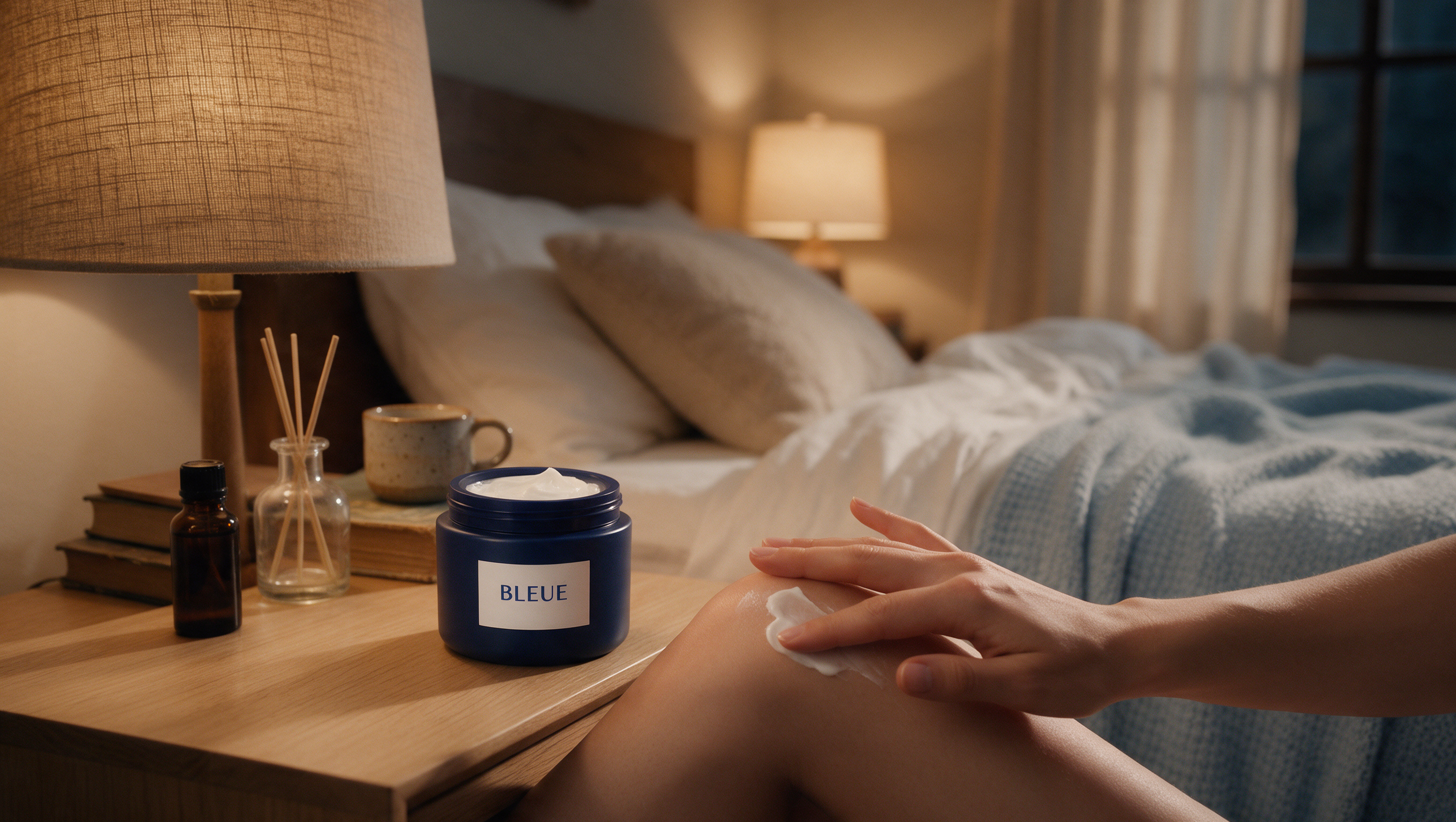
I tell every family who has been through the rest-and-return cycle to start applying it to both quads twice a day. After practice and before bed. Not on the bump. On the muscle above it. Both legs, even if only one knee hurts, because the other quad is almost always tight too.
It goes on like lotion. No sting. No burn. Kids do not fight it.
What Makes Bleue™ Different From Everything That Failed Before
- Addresses the cause, not the symptom. Rest pauses the pulling. Bleue™ releases the muscle doing the pulling. That is why the fix holds when the child returns.
- Magnesium chloride, not menthol. It is the actual mineral the muscle is short on. Not a numbing agent that masks the signal.
- Topical delivery, not oral. Goes through the skin directly to the quad. Does not lose concentration in the digestive tract like pills.
- Cream, not spray. Stays in contact long enough to absorb. No stinging. No burning.
- Works during the return, not just during the rest. Apply it while the child is playing. The quad stays released between practices instead of tightening right back up after every session.
See if Bleue™ is still in stock
The First Return That Actually Held
The mother I mentioned earlier started her daughter on Bleue™ before her second return to volleyball. Both quads, after every practice and before bed.
The first practice back, the mother sat in the gym and waited for it. The wince. The hand on the knee. The slow walk to the bench. She had seen it so many times she could predict the exact drill where it would happen.
It did not happen.
Practice ended. Her daughter walked off the court. Not limping. Not holding her knee. Talking to her teammates about the next practice.
The mother did not say anything. She had been here before. One good day did not mean anything. She had learned that the hard way.
Day three. Still fine. Day five. Still fine. End of week one. No pain, no limp, no sitting out. Her daughter was jumping and landing without flinching for the first time in six months.
By week two, she played a full weekend tournament. Three matches in two days. The mother watched every point and waited for the collapse. It did not come.
By week three, the mother stopped waiting. She stopped scanning her daughter’s legs after every play. She stopped bracing for the car ride home where her daughter would go quiet.
She called me four weeks in. She did not talk about pain or swelling.
She said, “She went back. And this time it held.”
This Is Not About Pain Management. It Is About Progress That Sticks.
The worst part of the rest-and-return cycle is not the pain coming back.
It is the hope disappearing. The first time the doctor says rest, you believe it will work. You sacrifice the season. You watch your child miss months of the sport they love. You get through it because there is a finish line.
Then the pain comes back and the finish line disappears.
No parent should have to go through that cycle twice. Rest once, come back once, and have it actually hold. That is what every family deserves.
The muscle just needs the mineral it is missing. That is the whole thing. Once the quad can release, the child goes back and the pain does not follow.
What I Would Tell Any Parent Who Has Been Through This Cycle
If your child rested, came back, and the pain returned, you are not starting over. You are just missing one piece.
Right now, the company behind Bleue™ is running a deal on their website. I do not know how long it lasts. I have been telling every family I work with about it and word is spreading fast among sports parents.
Click the button below and see if it is still available.
You will know within a week. Not because the bump disappears. Because when they go back to practice, the pain does not come with them.
Check Availability ›Limited quantities. Check if Bleue™ is still in stock.
If for any reason it does not work for your child, Bleue™ offers a 90-day money-back guarantee. No questions asked. No hassle. Send it back, get a full refund.
They are confident enough in what this does to let you try it with zero risk. That tells you something.
The only risk is doing nothing. Another rest cycle. Another season missed. Another return where the pain follows her back onto the court within a week.
You do not have to keep doing this.
P.S. Here is what families in my practice have reported after using Bleue™ during their child’s return to sport:
“We rested for three months. She came back to volleyball and the pain was back by day four. I was gutted. We started Bleue™ on both quads before her second return. One week in, no pain. Two weeks in, full practices. Three weeks in, a weekend tournament with zero issues. This is the first time going back actually worked.”
— Jennifer L., mother of a 13-year-old volleyball player
“My son rested from soccer for four months. Came back. Pain returned in six days. We did it again. Rested two more months. Came back. Same thing. I felt like we were trapped in a loop. His pediatric therapist told us about Bleue™. We applied it to both quads for a week before his third return. He has been playing for five weeks now with no pain. The loop is broken.”
— Scott D., father of an 11-year-old soccer player
“The worst part was telling her she had to sit out again after we already sat out once. She looked at me like I had taken it away from her twice. I found Bleue™ online and decided to try it before putting her through another rest cycle. Within a week, the after-practice pain dropped from an eight to a two. Within three weeks, she was back to full. We never had to sit out again.”
— Tanya R., mother of a 12-year-old basketball player
Click above to see if Bleue™ is still available at their current deal
THIS IS AN ADVERTISEMENT AND NOT AN ACTUAL NEWS ARTICLE, BLOG, OR CONSUMER PROTECTION UPDATE
Dr. Sarah Chen is a composite character created for illustrative purposes. Individual results vary. Bleue™ Joint Relief Cream is not a medication and is not intended to diagnose, treat, cure, or prevent any disease. Testimonials reflect individual experiences and are not guarantees of results. Consult your child’s healthcare provider before starting any new treatment protocol. This content has not been evaluated by the FDA.